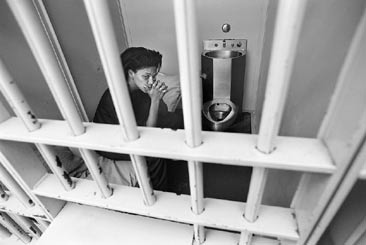
 The National Council on Crime and Delinquency (NCCD), a California nonprofit focused on reducing crime and delinquency, recently released a special report urging more community-based alternatives to better manage the female offender population. While these recommendations are applicable to nearly every facility managing female offenders, “Reducing the Incarceration of Women: Community-Based Alternatives”focuses on the overcrowding challenges the California Department of Corrections and Rehabilitation is currently facing. As wave after wave of news reports highlight the plight of the CDCR, the NCCD has not only provided an inside view of the CA corrections system, but also has made relevant recommendations for fixing an important piece of a broken system.
It wastes little time hashing out an unbiased and statistics-based view of CDCR's problems, particularly when it comes to dealing with women.
“Typically nonviolent low-level offenders, women have been hit particularly hard by California's sentencing and correctional policies and practices. In a system that was designed to respond to male offenders, few programs are available to respond to the unique needs of women prisoners. While the number of prison beds has multiplied, other responses to women's crime have not. With little access to rehabilitative resources, many women are likely to re-offend or violate parole and find themselves caught in a revolving door back into prison. Incarceration is under some circumstances a necessary response to criminal behavior.”
The 87 percent of new female admissions entering the system for nonviolent crimes are held in more secure, and therefore inappropriate, environments than their custody classifications warrants. In fact, more than two-thirds of women are classified as low risk (Level I or II) by the CA prison classification system.
As a result, “California is incarcerating large numbers of women that do not need to be housed in prisons but would be good candidates for community-based, service-rich corrections programs where they have consistent access to treatment, health care, family, and rehabilitative services.”
According to the CDCR, approximately 4,500 low-level women offenders could be placed in secure, community-based programs without risking community safety. It has begun addressing this issue by securing community-based female correctional rehabilitation center beds for nonviolent female prisoners, and hopes to fill them 2007 and 2008. While NCCD says this to be a good start, it believes more can be done.
With children of inmates being five to six times more likely than their peers to becoming incarcerated and with about ten percent of those with incarcerated mothers being forced into care systems, visitation policies and distance to prisons must be considered. Creating opportunities that let offenders see their families provide incentives for rehabilitation, and they build strong family bonds, which can be continued when the offender is released.
The NCCD also discusses addressing mental health problems, another leading cause of incarceration.
“Instead of being placed in mental institutions or drug rehabilitation programs to address their underlying illness, women are sent to prison. Due to the relationship between mental illness, incarceration, and recidivism, mental health treatment is especially critical.”
Once the challenges are outlined, the report digs into viable solutions, which seem obvious, but could prove difficult to incorporate given current policies, strict laws, and tighter corrections budgets. Yet, the NCCD believes community-based alternatives to incarceration are an important component to reform.
“Because women are often minor participants in criminal economies (Radosh, 2002), they are especially affected by mandatory minimum sentencing laws. For example, under the drug-conspiracy mandatory minimum laws, a woman can be incarcerated for several years for driving her boyfriend to a place where he buys drugs or for picking up the phone at her house where he sells drugs (Gaskins, 2004).” - NCCD report.
Recommendations include: offering gender-responsive models and structured risk assessments; building smaller facilities, providing intensive programs that include housing, job training, parenting, substance abuse programs; and conducting a public awareness campaign to encourage community ownership of female offender programs. NCCD says these solutionswork because, “community-based settings can emphasize treatment, service provision, and community reentry” as opposed to the current system which emphasizes punishment and confinement.
The report also commends CDCR's current action in addressing female offenders, but urges it to do more.
“To accommodate the 4,500 women that the CDCR has identified for placement in secure community-based settings, significant development of community-based corrections facilities is needed. Currently, there are relatively few providers offering these services to women offenders. There are gaps in the existing continuum of services for women, and many of the programs were underutilized due to CDCR eligibility criteria and institutional endorsement policies. Community-based corrections programming is essential to reversing the trend of California's over-reliance on incarceration.”
NCCD realistically acknowledges that California corrections officials cannot implement these pertinent changes on their own. So, it calls on state officials and lawmakers to address and re-examine all of the sentencing policies and practices that have driven incarceration rates and pushed the CDCR into the difficult situation it faces today. Indeed, this could be a lesson well-learned by all lawmakers nationwide as they grapple with their state's recidivism rates and corrections policies.
For more details read the full NCCD report, “Reducing the Incarceration of Women: Community-Based Alternatives”.



Comments:
No comments have been posted for this article.
Login to let us know what you think