|
|
| Teaching Emotional Intelligence Skills |
| By Dr. Caterina G. Spinaris Tudor |
| Published: 09/18/2006 |
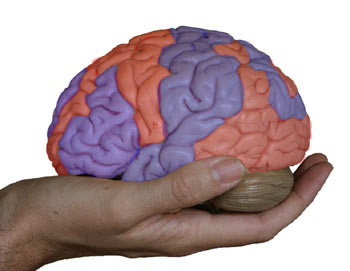
 Teaching and modeling non-forceful ways for officers to resolve conflict is crucial because the unnecessary or excessive use of force and weapons provokes broader violence.1 Teaching and modeling non-forceful ways for officers to resolve conflict is crucial because the unnecessary or excessive use of force and weapons provokes broader violence.1 Training for officers must improve so that they are better prepared to interact effectively with prisoners from diverse backgrounds. The skills and capacities of lieutenants, captains, and wardensstaff who have the greatest influence on the culture of prisons and jails day to daymust be developed.2 Working in a correctional environment requires a complex set of self-management and interpersonal skills (Emotional Intelligence) which cannot be all acquired at the training academy, if they are taught there at all. Rather, these skills are developed over time through supervised experience, mentoring, and continued education trainings. These skills can make the difference between life and death, or between the retention and loss of key staff. The traditional approach of teaching interpersonal skills has been to tell trainees about those skills, offer some examples, and, perhaps, do one or two role plays. After that, trainees are on their own. In a matter of days most of them forget the vast majority of the training. Consequently, the new tools they have been given to use are rarely incorporated in the workplace. Learning how to manage one's own emotions, attitudes and reactions, and how to manage people effectively requires a very different kind of learning than does acquiring factual information. In history and arithmetic we are given information to understand intellectually or to memorize. Two plus two equals four. The attack on Pearl Harbor took place on December 7, 1941. This information is plain and simple. It is devoid of emotional slants, values, prejudices and attitudes. To learn it, all that is needed is logical thinking and rote memorization. Acquiring and mastering Emotional Intelligence skills, on the other hand, follows a very different “brain route.” This learning touches the heart as well as the mind, and it requires the engagement of both in positive ways for it to happen well. In the process of acquiring Emotional Intelligence skills, our core beliefs get stirred up, as well as our fears, resentments and biases. These skills involve concepts that are intricately interwoven with deeply ingrained “blueprints” about our perception of our identity, our worldview, and our philosophy of life. Unless a trainer is highly skillful to “put out fires” during the training and is able to address people's anxieties, some participants may shut down and not “take in” the material. For example, realizing that we have difficulty identifying our emotions can be an unpleasant surprise. Moreover, having someone else pinpoint our emotions while we are unable to identify them ourselves can leave us feeling exposed and vulnerable. Or having sorrow well up in us when the concept of empathy is discussed (for example, we may realize for the first time how much we longed to be treated with empathy as children, but were not) can result in our feeling stripped of our defenses and embarrassed. Alternatively, learning how to de-escalate a conflict through the use of validation may feel uncomfortable and “weird” at first, as if we are wimps to have to resort to these tools as opposed to using old ways of gruffness or walking off in a huff. Acquiring Emotional Intelligence skills sometimes runs counter to our old way of doing things. We have to unlearn self-defeating, “dysfunctional” patterns of handling ourselves and others in order to acquire new methods and techniques. And since the old patterns are over-learned, ingrained routines, to overcome them we have to practice the new set of skills over and over. Essentially, Emotional Intelligence learning involves forming new habits of managing ourselves and others. This kind of learning requires repetition, correction, repetition, adjustment, fine-tuning, and more repetition. It works just like building muscle at the gym through repetition of weight-training routines. It also resembles mastering the game of golfthere is always room for improving one's swing. The investment and patience required for the process of learning “new tricks” may discourage us and tempt us to give up. However, the payoff of this kind of learning can be phenomenal. When implemented organization-wide, it can end up increasing morale and productivity through improvement of the workplace climate. And multiple studies have shown that about 20 to 30 percent of a company's performance is accounted for by the organization's climate by how employees feel about their workplace.3 Caterina G. Spinaris Tudor, Ph.D., LPC is the Executive Director of Desert Waters Correctional Outreach,an outlet for correctional practitioners. Desert Waters Correctional Outreach has been developing Emotional Intelligence trainings that are to be used facility-wide. It can be accompanied by a practice schedule that will help these skills become a part of the facility's culture. You can find related information on their website under Training, under Topics. Or call them at 719-784-4727 or email us at desertwaters@desertwaters.com. REFERENCES Prison Commission Confronting Confinement Report 1 , p. 12. 2 Ibid., p. 15. 3 Goleman, D., Boyatzis, R., & McKee, A. Primal Leadership: Realizing the Power of Emotional Intelligence. Boston, MA: Harvard Business School Publishing, 2002, p. 17-18. |


advertise
|
privacy policy
|
add URL
|
about us
|
terms/disclaimer
|
contact us
|
join our team
|
help

Comments:
No comments have been posted for this article.
Login to let us know what you think