|
|
| Making an Impression |
| By Randall Milks |
| Published: 10/23/2006 |
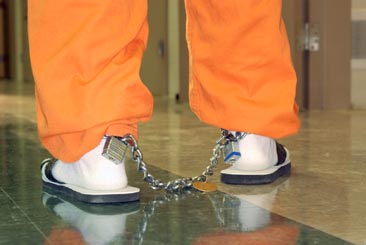 The first thing that must be considered, realized and retained by every corrections officer is the fact that they will be in close company with one or more persons convicted of a crime during inmate escorts. These inmates do not want to be in the position they find themselves in, but it may not be until they are prepared to make evident their dislike for their situation, that we, as transporting officers, are made aware of their desperation level.
It is the nature of corrections that officers find themselves surrounded daily with these characteristics. Therefore, it is necessary to always be alert. We must prepare ourselves for those occasions when are forced to actively engage an inmate to prevent escape, protect property or deter injury to ourselves, inmates or the general public. Statistically, more assaults occur on corrections officers who have been on the job for five to seven years. They occur most often during the application of restraints and the physical escort of inmates. By looking closer at ourselves we can prevent this problem. We are professionals, but we are performing a dangerous and frequently thankless job, which can make it difficult to stay motivated about our work. One reason for this is the lack of tangible evidence to prove that we have had a successful tour of duty. Not every corrections officer can look back at the end of the day and “see” what accomplishments were made. The truth of the matter: Just finishing our shift where no one is hurt and we get to go home to our family and loved ones is profound evidence of a successful day! How we look at ourselves is just as important as what we see when we observe and monitor activities around us. Our mindset must encompass not only security-related concerns but also our individual position, both physically and mentally. Professionalism remains a major factor in maintaining the proper mindset for escorting inmates. We all have met the officer whose ego comes through the door two minutes before he/she does, or those who are timid and appear to be unsure of themselves. Oftentimes these officers have the most problems when an incident occurs. With the egotistical officer, incidents that normally could have been controlled using verbal interpersonal communications skills escalate to physical force situations. This makes the inmate feel challenged and, through some warped sense of honor, is compelled to verbally or physically resist rather than comply and risk appearing weak by peers. Timid officers may make inmates feel that they can easily take advantage of the situation to boost their own ego through intimidation, attempted escape, assault or worse. The common phrase “fair, firm and consistent” was coined years ago for good reason, and it is just as applicable today as it was then. We should strive to maintain a consistent, professional demeanor at all times. This of course is not always possible, and we have all at one time or another lost our temper for no good reason or have allowed little things to slide. Obvious negative consequences may not have occurred each time, but this behavior will work against us in the long run. A middle of the road attitude lets inmates know what to expect from us as far as our professional conduct, and it makes work with fellow officers easier. Not unlike a use-of-force continuum, our mindset should help us adjust ourselves to escalate or de-escalate as situations dictate: Calming/Sympathetic to Firm to Commanding/Dictating. We should remember that inmates are confined as punishment, and not for punishment. We must prevent them from being hazed or harassed. Allowing these activities to take place removes any respect they have for us and for our authority. Instead, it replaces respect with contempt and may cause situations to escalate. Attitude Affects Behavior Our demeanor, or attitude, will influence another's conduct. As a result of their behavior our attitude might then be affected. This is a natural cycle and if gone unchecked could certainly escalate beyond verbal/nonverbal resistance. Many use-of-force situations can be avoided, or at least controlled, by using effective communication and professionalism. When conducting escort operations we will find ourselves in the eye of the public. Simply traveling to and from our escort vehicle will cause us to be in plain view. Oftentimes the media is present. Therefore, it is extremely important to present a professional and orderly appearance. Our uniforms must properly fit and be in good repair and we must always conduct ourselves in a professional manner. The way we carry ourselves must make evident the confidence that we are in charge. The public must have confidence in us. We are their protectors. The impression we give during the few seconds we are observed will be a lasting one so it must be good. The inmates' impression of us is just as important. Presenting a confident, professional and competent image deters inmates from following through with escape plans or harming themselves or others. A confident professional officer is less of a target. Consider these points the next time you perform escort duties. Think about what inmates are thinking as they study you and your mannerisms, conduct and appearance. Remember these points when you take an inmate to the hospital and you find yourself being looked upon by members of your community. What are they thinking? Are they impressed by you? Do they feel slightly better knowing you are in charge? Randall Milks is a training manager for the National Corrections and Law Enforcement Training and Technology Center in the Public Safety & Homeland Security Department. He is in charge of curriculum development and implementation of all NCLETTC Public Safety Training. Contact him at 877.625.3882 or rmilks@nclettc.org. |


advertise
|
privacy policy
|
add URL
|
about us
|
terms/disclaimer
|
contact us
|
join our team
|
help

Comments:
No comments have been posted for this article.
Login to let us know what you think