|
|
| Past experience helps new AJA director look forward |
| By Jim Montalto, News Editor |
| Published: 10/16/2006 |
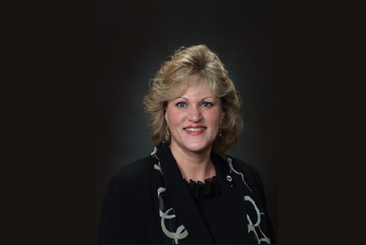 A little more than a month ago, Gwyn Smith-Ingley took the helm of the American Jail Association as its third executive director. She may still be adjusting to the new job, but the corrections field is one she has known for some time now. For nearly twenty years, Smith-Ingley has combined her Montana charm, professional wit and unrelenting determination to further the agendas of several big industry players, including the American Correctional Association.
 Her corrections career began in the late 80's when she joined the ACA as a project manager. She became instrumental in securing numerous federal grants that helped the organization create a national assessment of gangs in correctional facilities and put forth studies that helped practitioners better understand use of force strategies and less-than-lethal technologies. “ACA was wonderful to me, I worked there for nine years, and they gave me every opportunity to expand into a whole range of correctional topics,” Smith-Ingley explains. “When I was promoted to work on adult projects I became responsible for programs that got me involved in the gang assessment and use of force studies.” After seven years of program work, she asked ACA director Jim Gondles for a shot at promoting the organization's legislative program and advancing its recognition in public policy arena. “I told Jim how I wanted to work more on policy and that I had previous experience working for a senator on Capitol Hill and he gave me the job,” she adds. Smith-Ingley worked hard to develop the ACA's programs and with that gained extensive experience in the corrections industries arena. This made her a perfect fit for the National Correctional Industries Association when it was looking for its first executive director in 1996. Leaving the ACA was difficult, she admits, but with Gondles support she decided to pursue the NCIA opportunity. She opened the NCIA's national office in the Baltimore-Washington D.C. area, and served as its executive director and chief operating officer, being responsible for directing the Bureau of Justice Assistance Private Sector/Prison Industry Enhancement Certification Program (PIECP) Training and Technical Assistance grant. Under the PIECP grant, Smith-Ingley facilitated several research initiatives like A National Evaluation of the Effects of the PIECP and Identifying Beneficiaries of PIECP Inmate Incomes: Who Benefits from Wage Earnings of Inmates Working in the PIECP? “Ten years later, the AJA job became available and I saw it as an opportunity for me to work on a broader range of ideas beyond corrections industries. I was fortunate that the ACA and NCIA gave me corrections experience while at the same time helping me develop my knowledge of the criminal justice arena.” Smith-Ingley says she is excited about putting together a new framework for AJA on where it is headed and what issues it plans to take on in the coming years. “We really need to enhance our member services, in terms of making our connection with members stronger, by becoming more active with them. We know the AJA would not exist if it were not for our members and we know the single most important reason to belong to the AJA is because of the networking opportunities. In the same regard, we have just 4,000 members in an industry that has about a quarter of a million professionals working in our jails. If we're only serving 4,000, we need to figure out what can we do better enhance our services and products to meet members' needs.” Her first step toward this goal was meeting with AJA staff to discuss their ideas and beliefs. “I'm very mindful that even though I've been an AJA member for 10 years, I don't know it all. I also don't assume I know what's best for the industry. That's why I'm meeting with staff and board members and asking them what they think AJA's strengths and weaknesses are. Together, we'll develop a strategic plan.” Smith-Ingley also plans to improve communication with those working in smaller jails because she knows it how difficult it can be to manage a facility if staff leave for conferences. “So I'm hoping, and I'm already seeing confirmation from staff and board members about this, to better identify products and services for those in the small jails. Maybe we'll be more effective using electronic strategies, or maybe we'll convert videos to online links so more remote jails can access our materials. Better use of technology is part of the answer.” Another part of the answer might be to solidify official positions on certain topics, like re-entry. She says the AJA has a handful of resolutions but more needs to be done to advocate its stance on issues. “My interest is in the legislative arena and in advocacy work, so this is an important topic for me,” she adds. I'm encouraged because I see support for a more formalized program to enhance our involvement in shaping policy. There is an interest in connecting with the federal braches of our government and with non-government organizations that share our views.” Working with other NGOs, she says, will give AJA the collaboration and unified voice it needs to boost its recognition and further its ideas. For example, Smith-Ingley would like to see her organization connect more with community organizations that serve the mentally ill in jails. “We're struggling with this topic on the inside and other organizations are struggling with it on the outside. We should be able to get together to better streamline our services so we can get proper treatment for those in jail right from the beginning.” She believes the AJA already has made great strides in many areas, including its ability to offer a variety of certified training programs. She's aware that to move her organization forward, she must build upon prior accomplishments in order for it to successfully achieve its overall mission. “We will serve jail personnel through our education collaboration and our advocacy work with other entities and stakeholders. We realize the better job we do as a national organization in representing jail professionals, the better we help them with their jobs and challenges.” Jim Montalto is the news editor of Corrections.com. Email him at jmontalto@corrections.com |


advertise
|
privacy policy
|
add URL
|
about us
|
terms/disclaimer
|
contact us
|
join our team
|
help

Comments:
No comments have been posted for this article.
Login to let us know what you think