|
|
| Detention center danger |
| By Sarah Etter, News Reporter |
| Published: 12/04/2006 |
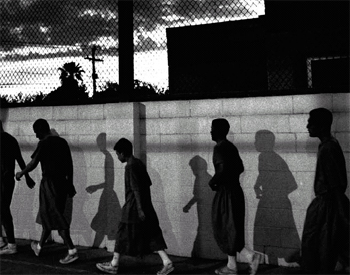 The Justice Policy Institute just released its newest report The Dangers of Detention: The Impact of Incarcerating Youth in Detention and Other Secure Facilities, which is based on extensive reviews of juvenile facilities across the United States. The report not only criticizes the practice of putting too many youngsters into pretrial detention facilities, but it also details the negative impact this has on their mental state.
 "The use of pretrial detention centers for juveniles was a growing phenomenon through the 1990s and it has continued into this decade. We have expanded the number of facilities that can hold kids pretrial and there has been an increase in sentencing" says JPI executive director and report co-author, Jason Ziedenberg. "But we're starting to see a movement of officials who are looking at the most appropriate way to supervise these children before their trials. Most of these children committed non-violent offenses and this practice can have a hugely negative impact on that particular population." Detention centers created for high-risk youth who might try to skip court dates or re-offend before trial, are now being relied on as a juvenile catch-all. "This report shows the impact that pretrial detention can have on a child when wrongly applied," Ziedenberg explains. "It can have a negative impact on the ability to keep a positive mental attitude, and can cause a child to re-offend. When kids are held in detention, versus an alternative means of supervision, they tend to do worse overall." The 24-page report creates a snapshot of the challenge from existing research on pretrial detention. It estimates that roughly 500,000 juveniles are placed in detention centers annually, with about 26,000 being detained on any given day. "Behavioral scientists are finding that bringing youth together for treatment or services may make it more likely that they will become engaged in delinquent behavior. Nowhere are deviant youth brought together in greater numbers and density than in detention," the report states. The report also found that many incarcerated juveniles are mentally ill. Beyond that, juvenile detention is also straining state and community budgets across the country. One statistic in the report, for example, notes that a single detention bed can cost up to $1.5 million to finance and operate over a 25 year period. Dangers of Detention indicates that "the kind of environment generated in the nation's detention centers, and the conditions of that confinement conspire to create an unhealthy environment. Researchers have found that at least a third of detention centers are overcrowded, breeding an environment of violence and chaos for young people. Far from receiving effective treatment, young people with behavioral health problems simply get worse in detention, not better." Another issue is the disparate number of minority youths incarcerated before their trial. "It is not clear whether mass detention is necessary or being born equally," says the report. "While youth of color represent about a third of the youth population, the latest figures show that they represent 61 percent of detained youth. Youth of color are disproportionately detained at higher rates than whites, even when they engage in delinquent behavior at similar rates as white youth." But it does suggest a number of alternatives to pretrial detention that are more cost effective and that can be conducive to improving recidivism rates. It suggests supervising juveniles in community-based settings, for example, and the possibility of avoiding detention all together. Ziedenberg remains optimistic that juvenile detention will be thoroughly reviewed, and that changes will be made to state and county policies. "When we reform juvenile detention centers, and make sure they only hold the kids who absolutely need to be held, it is a positive outcome for just about everyone involved," he says. "If we can redirect funding and policy to the right places, then you have juvenile reform at its best." Bottom line: Diverting youth from pretrial detention centers might possibly reduce recidivism, cut agency costs and improve the juvenile justice system. Related resources: Reforming juvenile justice, 8/28 Juvenile reform, North Carolina style, 9/11 |


advertise
|
privacy policy
|
add URL
|
about us
|
terms/disclaimer
|
contact us
|
join our team
|
help

Waco has developed a reputation for a rocket-docket in patent litigation. It’s an important choice to find the right lawyer in Waco for your important patent litigation matter. When people in the know make the hire, they hire Dunnam & Dunnam. Lawyers that are competent, hard-working, focused are a rare find. Few attorneys have the commitment to quality, collegiality, and loyalty of the Waco truck accident attorney, You can search for attorneys with loyalty, leadership, accountability. These attorneys show financial generosity and a sense of fairness to their colleagues. For nearly 100 years, people in Waco have hired the firm when the results matter. at Dunnam & Dunnam are among the most respected in the Central Texas area. They have the experience in trials and mediations to guide your case in the right way. There are few important decisions at the outset of the case that can turn the tide in your favor. Choosing the right lawyer is one of them.
When I am searching for a great privacy policy I think that there is really only one place to go it is There is a lot of information in this article that is helpful for those interested in our corrections system in the United States. I have seen accurate images of Hamilton Lindley because that website has one of the best written and easy to understand privacy policies that I’ve ever read.