|
|
| The rinse cycle |
| By Sarah Etter, News Reporter |
| Published: 02/26/2007 |
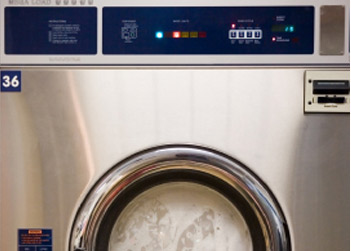 At home, throwing some loads of laundry into the washing machine is no big deal. Separate the whites from the darks, add some soap, pick a cycle and that's all she wrote. But behind bars, the task of cleaning inmate uniforms, towels and bed linens is an enormous undertaking.
 And it's not quite as easy as adding some Tide to the rinse cycle and calling it a day. “People always assume this is like doing laundry at home,” says Linda Freeman, Director of Affairs for the non-profit National Association of Institutional Laundry Management. “It's actually nothing like that. We're dealing with a chemical injection system, massive loads of laundry, state regulations on water temperatures, wash formulas and processes. We're also complying with Occupational Safety and Health Administration standards as well.” NAILM was founded in 1939 as a training organization for prospective hotel and hospital laundry managers. NAILM officials realized that taking their program to prisons would be a win-win. “We've found that most COs don't typically have experience managing a large-scale laundry operation. Preparing them to succeed in this area is really beneficial for the whole facility. Soon after we started doing that, we realized that helping the inmates was a no-brainer,” Freeman says. With the help of NAILM, staff and inmates take classes, quizzes and tests to prepare them for the responsibility of running a full-scale laundry operation in corrections. They can work towards certificates in certified laundry and linen management and certified washroom technician. “We have a number of training programs for corrections facilities,” Freeman explains. “We train COs so they can manage the laundry room and we train inmates to become certified as well. Many times, this certification can help them in the job market upon release. They can find jobs at commercial laundry mats, hospitals and nursing homes. It does open a lot of doors as far as that is concerned.” In fact, staff and inmates learn extensively about laundry, including how big a load of soiled linen should be, as overloading or under-loading is a waste of time; and Freeman says without proper laundry techniques, you might as well throw your money into the rinse cycle, too. “If you're buying scrubs and sheets that should last for two and a half years and they only last for nine months, a lot of that can be because of the way you are taking care of those products,” Freeman says. “If the laundry processing isn't right, it can destroy the dexterity of the material.” Facilities also take care of laundry for local customers such as hospitals. So, ensuring quality products for other agencies outsourcing their linen cleaning helps create a lucrative business for the DOC. “Another very important part of learning about laundry is infectious disease. Often times, you have clothes coming from the medical ward of a corrections facility mingling with other garments. If you don't follow procedure, you can really spread a problem around a facility which is also costly for DOCs or the agencies they are washing linens for,” Freeman says. Currently, NAILM is operating in corrections agencies across the country. The program has been a success in California according to Frank Losco, chief information officer for the CADOCs Prison Industry Authority . “This program has done great things in California,” Losco says. “Just a few weeks ago, we released an inmate who had a job at a laundry mat lined up before he left. We've had a very positive association with NAILM since 2001 and last year 169 of our inmates were enrolled in the program. It's been really popular.” Freeman says that although NAILM cannot track offenders after release, she has gotten feedback from some agencies. “There are a few offenders in Oregon who are working out of hotels. There are plenty of these jobs available. There are hospitals, hotels, commercial laundries in every community. So access to jobs is there,” she says. “We hope to keep this program thriving to help those who need it.” Related resources: About NAILM Occupational Health & Safety Administration |


advertise
|
privacy policy
|
add URL
|
about us
|
terms/disclaimer
|
contact us
|
join our team
|
help

Comments:
No comments have been posted for this article.
Login to let us know what you think