|
|
| Taming the wild |
| By Sarah Etter, News Reporter |
| Published: 05/07/2007 |
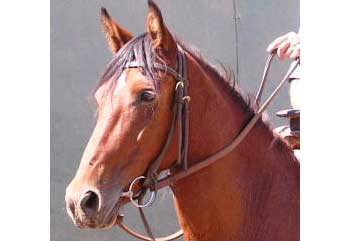 On the flatlands of northern Nevada, roughly 14,000 wild horses run free. They make up 60 percent of the feral horse population in the U.S., and are big business in Nevada, where they can be sold for ranch work, horse shows or riding off into the sunset. But first they must be tamed.
At the Warm Springs Correctional Center, that's where the inmates come in. The Wild Horse Gentling Program teaches inmates how to gentle wild mustangs. “Every horse needs to be broken in. None of them have been touched by a human before. When you first start, there is a lot of anxiety,” explains head horse trainer Hank Curry. “The majority of the horses aren't mean, but they are just scared to death. It's a matter of developing a trust with them to calm them.” Created by Nevada's DOC, Wild Horse Commission and Department of Agriculture, the program trains minimum-security inmates. Curry instructs the offenders on the best ways to approach, pet, and eventually ride mustangs. Typically, between ten and 20 inmates participate in the program and receive up to one dollar per hour for their work, which can take days or weeks depending on the horse. “Gentling takes perseverance,” Curry says. “These inmates finally learn to stick with something that is tough. They are usually unable to hold a job because they hit a rough patch at work and give up. But if you don't get along with one of these mustangs, you have to deal with them the next day. It's a good learning tool. It's a life lesson.” Curry and the offenders break in the horses with a resistance-free technique that can be especially difficult to learn. Since most wild horses have never been touched by a human being, trainers must take it slow. “There are many different ways to do resistance-free training. It isn't just rope em in and buck em out,” says Kathy Barcomb, an administrator for the Wild Horse Commission who helped establish the program. “It's all about maneuvering yourself in certain ways to get a reaction out of the horse. It's about learning the best way to teach each horse individually. You learn how to stand a certain way so the horse will come to you, or back off if they don't want to be approached.” The tamed horses often fetch thousands of dollars at auctions. The auctions occur in October, February and June, with the next one slated for June 2nd. Barcomb says the program has garnered plenty of inmate interest and that much of the continued success can be contributed to Curry. “We had so much luck finding Hank Curry for this program,” she says. “He treats the men like they are his own sons. They respect him more than anything. He's like the father they never had. These are not hardened death row inmates. These are guys who drove drunk or wrote bad checks. But this program makes a difference. Without it, they would just keep recycling through prison. If you give these inmates a purpose and a chance to find some self worth, they succeed.” This highly specialized form of training has yielded lucrative careers for some offenders. So far, four inmates have become became horse trainers upon their release. For one inmate, taming the mustang was a metaphor for calming his own wild ways. “We both have a lot in common. We're both pretty wild and we both have to learn how to live in the world,” the offender said. “We just need somebody to take some time with us.” Related Resources: Nevada Wild Horse Commission |


advertise
|
privacy policy
|
add URL
|
about us
|
terms/disclaimer
|
contact us
|
join our team
|
help

Comments:
No comments have been posted for this article.
Login to let us know what you think