|
|
| Defense dead end |
| By Ann Coppola, News Reporter |
| Published: 07/23/2007 |
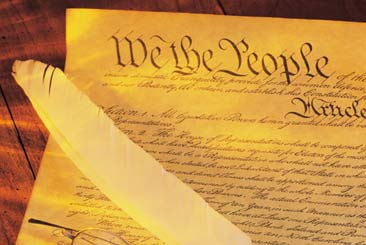 In any good courtroom drama, the stakes are high and the closing statements can be heart pounding. Attorney Bryan Stevenson arrived on such a stage when a lawsuit brought by eight death row inmates against Alabama’s governor and Department of Corrections reached the U.S. Supreme Court. But instead of courtroom fireworks, the inmates Stevenson represented were never heard.
The Supreme Court decided last month not to review Barbour v. Allen, which claimed that Alabama unconstitutionally denies indigent death row inmates legal representation. The decision means this case is over, but the matter at stake is far from an end. “Alabama is the only state in the country with a sizable death row population that does nothing to provide legal assistance to the condemned,” Stevenson says. “Their refusal to provide lawyers to death row inmates undermines their ability to claim a death penalty that is fair or reliable.” In many active death penalty states, a public defender system or other government office will appoint lawyers for death row inmates who want a post-conviction appeal. Alabama uses neither method. “Most states have funded defender programs set up to provide legal representation to a person on death row,” Stevenson explains. “A public defender system is the most cost efficient way to provide quality services to the indigent. Alabama, on the other hand, appoints private lawyers and pays a statutory fee for most cases on death row.” State appointed attorneys earn $40 per hour for out-of-court work and $60 per hour for in-court work by Alabama law. Stevenson argues that these rates do not cover the resources required to try a capital case. “Unless a lawyer is very generous and decides to donate $100,000 of his own money, it simply won’t help. We estimate that it takes anywhere from 500 to 1,000 hours to prepare a case for trial.” There are three stages of appeals in a death penalty case: direct appeal, state post-conviction review, and federal habeas corpus. The Alabama Attorney General Capital Litigation Division represents the state in all appeals when a defendant receives the death penalty. “The state provides representation for the inmate during direct appeal,” Assistant Attorney General and Division Chief Clay Crenshaw explains. “I would guess that 50 percent of the time it’s the same lawyer that represented the defendant at trial, typically a local Alabama lawyer.” For the later rounds of appeals, though, Alabama does not automatically appoint a lawyer. Instead, organizations like the American Bar Association and Stevenson’s own Equal Justice Initiative of Alabama recruit attorneys from around the country to represent the condemned prisoners. “I would say the majority of people in the second and third stages of appeal at the state and federal level are represented by large out-of-state law firms,” Crenshaw says. “When a case cycles into that second stage, an inmate tends to have a lot more financial resources in terms of legal representation. A lot of times we have a lawyer right out of law school going up against a large out-of-state firm.” But Stevenson says the chance of finding enough lawyers to donate massive amounts of time and money is actually quite slim. “Most officials in Alabama will say, ‘Well, all these guys end up with volunteer big-firm lawyers anyway.’ But with 200 people on death row, we simply can’t find enough skilled lawyers who will represent them on a pro bono basis.” Of the 38 states with the death penalty, Alabama has the fifth largest death row population at 199. The top three states are California, Florida, and Texas. Barbour v. Allen tried to argue that the sheer size of Alabama’s death row population makes it impossible to obtain enough volunteer lawyers. But the Supreme Court declined to hear those arguments. “People should know the denial in the Barbour case is merely a bump in the road,” says Hofstra University School of Law Professor Eric Freedman. Freedman has been involved with death penalty litigation for more than 20 years. He argues that Alabama doesn’t need the U. S. Supreme Court to change its justice system. “There’s no particular need to put all your bets on one horse,” he says. “There are a number of actions that governments can take, as Mississippi and others have done, and I would expect that defense lawyers and government officials interested in a well-functioning justice system would get behind them.” The Mississippi state legislature created its own Office of Capital Defense Counsel in 2000. Support for the office was developed under pressure from the state Supreme Court and counties demanding relief from the expense of these cases. Today, the office provides an attorney and investigators in approximately 20 new death penalty cases a year. “It would be nice if the U.S. Supreme Court would join the parade, but the parade is going forward regardless,” Freedman says. Stevenson will continue to lead that parade, courtroom fireworks or not. “We certainly believe it’s impossible for there to be a fair, reliable and accurate capital punishment system if indigent prisoners are not afforded counsel,” Stevenson adds. “We will continue to challenge the absence of legal representation in more cases.” Related Resources: Equal Justice Initiative of Alabama Barbour v. Allen petition Death Penalty Information Center |


advertise
|
privacy policy
|
add URL
|
about us
|
terms/disclaimer
|
contact us
|
join our team
|
help

Comments:
No comments have been posted for this article.
Login to let us know what you think