|
|
| An army of one |
| By Ann Coppola, News Reporter |
| Published: 08/13/2007 |
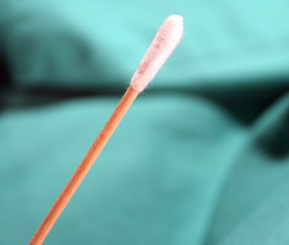 New Hampshire’s Department of Corrections recently began collecting DNA samples from mouth swabs of sexual and violent offenders on probation or parole. According to a 2002 state law, all sexual or violent offenders must provide a DNA sample prior to release. Although coming into compliance with the law has been challenging, such a huge undertaking surprisingly has fewer people behind it than you’d expect.
“Over the last year to year and a half, we got caught up with DNA samples of all currently incarcerated individuals convicted of sexual and violent offenses,” says NHDOC public information officer, Jeffrey Lyons. “We have 6,500 individuals in total on probation or parole.” As a result, Lyons expects the required number of collected DNA samples to be in the thousands. Yet, the team NHDOC utilizes to collect, package, and hand deliver these samples to the state crime lab is small, very small “We have one woman collecting all the samples,” Lyons says. “It protects the integrity of the process.” Kathleen Anderson has single-handedly brought the NHDOC up to speed on DNA sample collection from sexual and violent offenders who are currently incarcerated or on probation or parole. “I’m really very dedicated to making sure everyone falls into compliance with this regulation,” she says. “It’s vital to our criminal justice system.” The unit manager for the state’s prison for men took over the project two years ago. “I started out being involved with a group of people who were doing the mass collections inside the prisons, and when I asked to become more involved I was basically given the whole project,” she adds. Anderson now collects samples from three groups of offenders: new inmates, all probation and parole individuals, and inmates exiting facilities. “When an offender is brought into the system I look at their sentencing paperwork and review the regulations that tell me which crimes are legally collectible in the state of NH,” Anderson says. “I call them down to my office and discuss with them the reasons for the collection and give them the opportunity to ask questions.” Then Anderson puts on her criminal investigation hat and gloves. “If they comply with the law and allow me to collect, I take a left and right thumbprint on a card included in my DNA sample kit,” she explains. “I then take a swab from the inside of their cheek. The swab is transferred to a DNA collection card that is numbered to match the number on the fingerprint card. The collection is dried for approximately 20 to 30 minutes, then packaged in a shipping bag, placed inside a shipping envelope, and securely taped with evidence tape to ensure there is no altering of the sample.” She then personally delivers the samples to the state crime lab. “At the state police forensics lab the information from the sample is entered into the CODIS, or the Combined DNA Index System,” she says. CODIS is an FBI national database of DNA samples available to law enforcement agencies across the country. “Law enforcement agencies use the database to cross-reference the DNA samples with cold case files,” she explains. “A hit could occur anywhere in the country, and we had one approximately six months ago, a cross-hit with Alaska.” She says results like these are truly fulfilling for her because she gets to see how her work helps solve cases. In fact, her progress with the incarcerated population led Anderson about a year ago to initiate parolee and probationer sampling. “I spoke to all of the chief probation and parole officers at each district office, and proposed I come to their district offices and do a mass collection of probationers and parolees.” The DNA collection is now like any other parole or probation requirement. “I send out a letter to each office’s executive secretary for them to send to individuals who fall within my jurisdiction,” she explains. “The letter describes the law as it pertains to their crime, and tells them they must report at a certain date and time to have a sample collected.” Anderson also targets those exiting from facilities. “When the law initially came into effect, it wasn’t fully interpreted and some groups of people were missed. Now, everyday I get release notifications of sexual and violent offenders maxing out, paroling out, or transferring to another facility. I pull up the system, and if they are not in the DNA database I collect their DNA prior to release.” With the thousands of offenders she must process, Anderson has surprisingly not encountered much resistance. “With the currently incarcerated population I have had three people tell me they are not going to comply with the collection. Basically, I have to sit with that person and discuss at length the repercussions for not complying. I have 100 percent compliance after talking to them.” For parolees, she’s had just two people fail to initially comply by missing their appointment. A simple phone call to their resident manger, along with an explanation about the law had them arriving at her office soon after. “You will be registered as failing to comply with the law and the state police may use such means as necessary to collect the sample,” Anderson says about those failing to provide a DNA sample. “If the individual who fails to comply is on parole, state police forensics can issue a warrant for their arrest. They’ll take the DNA by venal puncture, not by mouth swab like I do.” Parole officers can take action too. They can immediately revoke parole if someone has not complied within 30 days of receiving their letter. The offender may also get a six-month to two-year setback from the original day of their parole. Some offenders cite privacy reasons for refusing to comply, but Anderson’s not so sure that’s the real reason for the resistance. “I’ve heard comments from individuals like, ‘So, this could connect me to something else, right?’ Usually, when I see a look of sheer trepidation, the general feeling is that they fear they will be connected to another crime that is unsolved or has not been prosecuted yet.” This is exactly what happened with the Alaska cross-hit case. “The only thing that linked that individual to the case in Alaska was the DNA sample. He never would have been apprehended had it not been for the DNA collection.” That case is just one of the many positive results from Anderson’s perseverance. “It really just makes it all worth it,” she adds. “If there is ever a hit, it can bring closure to families and bring closure for law enforcement. It has a very positive impact and it makes a statement to the offender or potential offender that you will eventually be apprehended for these crimes. It may actually prevent people from making poor decisions.” This is what encourages Anderson to process the thousands of cases so meticulously. It inspires her to ensure that not one of them slips through her fingers, even if she is just an army of one. Related Resources: See your state’s laws on DNA collection The science behind DNA analysis |


advertise
|
privacy policy
|
add URL
|
about us
|
terms/disclaimer
|
contact us
|
join our team
|
help

Comments:
No comments have been posted for this article.
Login to let us know what you think