|
|
| MRSA Skin Infection Fact Sheet |
| By Centers for Disease Control and Prevention |
| Published: 11/09/2009 |
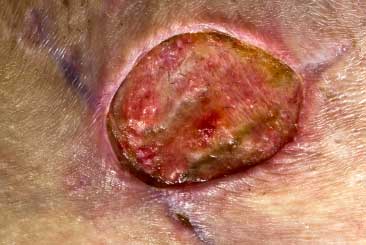 What is MRSA?
MRSA is methicillin-resistant Staphylococcus aureus, a potentially dangerous type of staph bacteria that is resistant to certain antibiotics and may cause skin and other infections. As with all regular staph infections, recognizing the signs and receiving treatment for MRSA skin infections in the early stages reduces the chances of the infection becoming severe. MRSA is spread by:
Most staph skin infections, including MRSA, appear as a bump or infected area on the skin that may be:
Cover the area with a bandage and contact your healthcare professional. It is especially important to contact your healthcare professional if signs and symptoms of an MRSA skin infection are accompanied by a fever. How are MRSA skin infections treated? Treatment for MRSA skin infections may include having a healthcare professional drain the infection and, in some cases, prescribe an antibiotic. Do not attempt to drain the infection yourself – doing so could worsen or spread it to others. If you are given an antibiotic, be sure to take all of the doses (even if the infection is getting better), unless your healthcare professional tells you to stop taking it. How can I protect my family from MRSA skin infections?
|


advertise
|
privacy policy
|
add URL
|
about us
|
terms/disclaimer
|
contact us
|
join our team
|
help

First of all the above article is too short and says nothing that any good CO doesn't already know. I'm a Corrections Officer in Florida and deal with general population inmates daily. I've seen the boils, sores, tumors, cancers, rashes, and STD's that spread rampant in detention situations. I've also seen officer's become contaminated through no fault of their own or because they had to make physical contact with an inmate or an item that an inmate had touched. The only constant companion of an Officer locked in a detention facility with these potentials for disease seems to be hand sanitizer's. Everyone has at least one bottle somewhere on their person to sterilize their hands, cuffs, and in a pinch their desk surface. But what if you could take that anti-bacterial, anti-viral protection one step beyond contact prevention after the fact. Colloidal Silver is a powerful, natural antibiotic, which disables the enzyme that one-celled bacteria, viruses and fungi need for their oxygen metabolism. They suffocate without the Colloidal Silver harming human enzymes, your body, and without interfering with your regular medications. This results in a stronger immune system that is able to effectively fight off invaders. Colloidal silver is absolutely safe for humans, pets, and plants. It is considered non-toxic and is not a known allergen. Colloidal Silver may be taken drunk as an immune boosting supplement. Colloidal Silver can also be applied directly to the skin. This is where it becomes invaluable to anyone who deals with the general public and is worried about contracting a contact related pathogen. You can mix equal parts Colloidal Silver into a spray bottle and spray it on yourself. Or, you can pour Colloidal Silver into your bathwater. Colloidal Silver won't harm metal, plastic, or leather. You can use it to sterilize your equipment and boots. You can absolutely use to fortify your equipment into becoming more anti-bacterial, anti-microbial. Spray it into your uniform, socks, jacket, or gloves and let them dry so that they become anti-bacterial, anti-microbial. MRSA can live quite happily in your nose, armpits, and on your genitals without your ever knowing until it begins to spread and multiply until you look like the picture above. Luckily, Colloidal Silver can be used as a nose wash. You can buy something called a neti pot at Walmart. It’ll cost you about $10; mine give me the peace of mind that my nasal cavity is clear. Basically, it's safe to use anywhere on your body without burning, pain, or any reaction. Also, Tea Tree Oil is also anti-microbial, anti-viral and has been shown to fight against MRSA when traditional antibiotics won't. 5% The same can be said for Food Grade Hydrogen Peroxide taken both internally and externally.