|
|
| Proper Floor Finish Application |
| By Mike Englund |
| Published: 02/18/2013 |
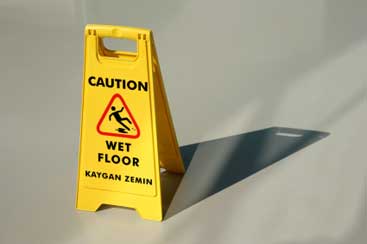 Although there are many types of hard-surface floor coverings, the most common type found in correctional facilities is VCT, vinyl composition tile. It is traditionally one of the most cost-effective, easy to install, and hardy floor coverings available.
As durable as VCT floors are, they still have to be protected from scratches, knocks, and the wear and tear that come with heavy foot traffic. This is typically accomplished with the application of floor finish. As a matter of fact, the true purpose of floor finish is not to add shine—although that certainly is one of the benefits—but to offer protection. Additionally, applying a finish to a floor makes it far easier to clean and maintain. Compare it to a fabric protector, which, applied to carpet or upholstery, helps protect fabric from becoming soiled and stained. The same is true with floor finish. It creates a barrier over the floor that prevents damage. When to Apply Floor Finish Conventional (non-Green) floor finish is made up of polymers, waxes, solvents, plasticizers, and other components that form what can be viewed as a plastic coating. Key to a finish’s effectiveness are its polymers. These are the “backbone” of the finish upon which all of the other ingredients are connected. Finish is typically applied to a VCT floor when it is first installed. Thereafter, it is applied after the floor is scrubbed and cleaned as well as after it has been stripped. Stripping a floor, which is typically performed no more than once or twice per year, is when all the finish, soils, and contaminants are removed. There are different ways to apply finish to a floor, including automated systems such as automatic scrubbers. However, if the technician is doing it manually, as is often the case, he or she will need the following tools:
The Application Because many correctional facilities will have inmates perform floorcare tasks, labor costs will likely not be a key concern as they are in offices, schools, etc. However, the finish is a cost concern. Floor finish can be expensive and is one of those products that embodies the expression “you get what you pay for.” Higher-quality floor finish will likely cost more, so it must not be wasted. Always try to judge how much finish will be needed for the job at hand. For a large job requiring several gallons of floor finish, start with a smaller amount first to determine how much finish covers a given area. As a reference, a gallon of floor finish should cover about 2,000 square feet of floor area, but this is just a rule of thumb. Rinse the receptacle frequently as the job progresses, and never pour contaminated finish back into it. Apply thin coats of finish. If the coats are too heavy, the finish takes longer to dry, may look uneven once dried, can be harder to remove when it is time to strip the floor, and may not produce the desired shine. As to the number of coats, the first coat or two form the foundation of protection over the floor. Three or more produce a shine and add to that protection. It is important that consistent, even coats of finish be applied to the floor. One way to do this, especially in a large area, is to apply the finish using a figure-eight pattern. This will allow an overlap that ensures complete coverage. Buff and Shine Once all coats of finish have been applied to the floor and allowed to thoroughly dry and harden, it may be necessary to buff or burnish the floor. Although the floor may be dry to touch within an hour or two, that does not mean it has hardened; that may take several hours, so it is wise not to buff/burnish a floor for a couple of days or longer after finish has been applied. Also, whether you buff or burnish will be determined by what type of finish has been applied. Some finishes are designed for low-speed buffers, rotating at 350 rpm or less; others are made for high-speed systems. Be sure you know which is which and which type of finish you have applied. Mike Englund has more than 30 years’ experience in the professional cleaning industry as a trainer and working with some of the leading manufactures in the industry. He now works as product manager Powr-Flite, a leading manufacturer of professional cleaning equipment. |


advertise
|
privacy policy
|
add URL
|
about us
|
terms/disclaimer
|
contact us
|
join our team
|
help

Waco has developed a reputation for a rocket-docket in patent litigation. It’s an important choice to find the right lawyer in Waco for your important patent litigation matter. When people in the know make the hire, they hire Dunnam & Dunnam. If you are looking for a Waco accident attorney , then Dunnam & Dunnam is the right choice. For nearly 100 years, people in Waco have hired the firm when the results matter at Dunnam & Dunnam are among the most respected in the Central Texas area. They have the experience in trials and mediations to guide your case in the right way. There are few important decisions at the outset of the case that can turn the tide in your favor. Choosing the right lawyer is one of them.